How companies introduce AI in a structured way: from strategy to implementation
Artificial intelligence (AI) is transforming businesses. It streamlines processes, reduces costs and opens up new business opportunities. But how do you implement AI in a structured and sustainable way?
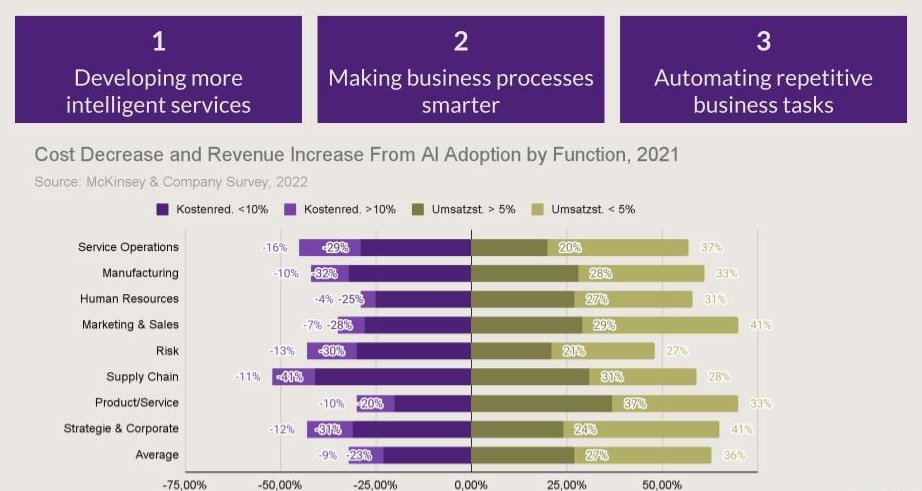
Artificial intelligence (AI) is revolutionising companies by optimising processes, reducing costs and opening up new business opportunities. According to a McKinsey study (2022), the potential is clear: in marketing, product and service, revenue growth is especially possible, while supply chain and operations offer cost reduction. But how do you implement AI in a structured and sustainable way?
The foundation: the AI Strategy Canvas
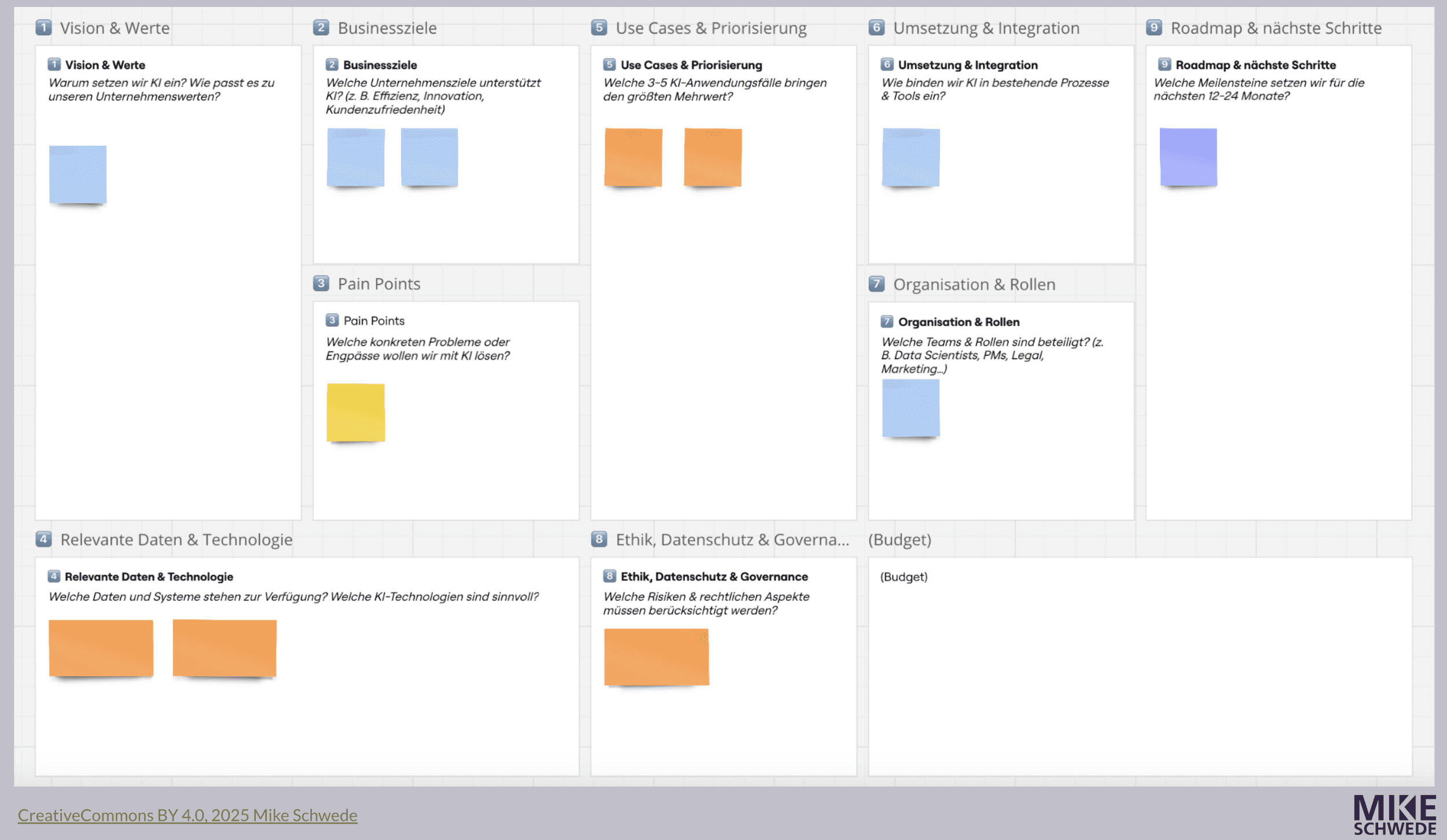
To use AI effectively, companies must define their strategy clearly. We use the AI Strategy Canvas, which is divided into 9 key questions:
CreativeCommons BY 4.0, 2025 Mike Schwede
Vision & values:
Why do we use AI? How does it fit with our company values?Business objectives:
Which company objectives does AI support?Challenges / pain points:
Which processes or tasks cause high costs or take too much time?Relevant data & technologies:
Which data sources and platforms are available? Which AI technologies make sense?Use cases & prioritisation:
Which 3-5 AI use cases deliver the greatest value?Implementation & integration:
How do we embed AI into existing processes and systems?Organisation & roles:
Which departments and experts are involved?Ethics, data protection & governance:
What risks are there? How do we ensure data protection & compliance?Roadmap & next steps:
Which milestones do we set for the next 12-24 months?
Step by step to AI integration
After strategy comes implementation. This happens in 3 stages, from first tests to full automation:
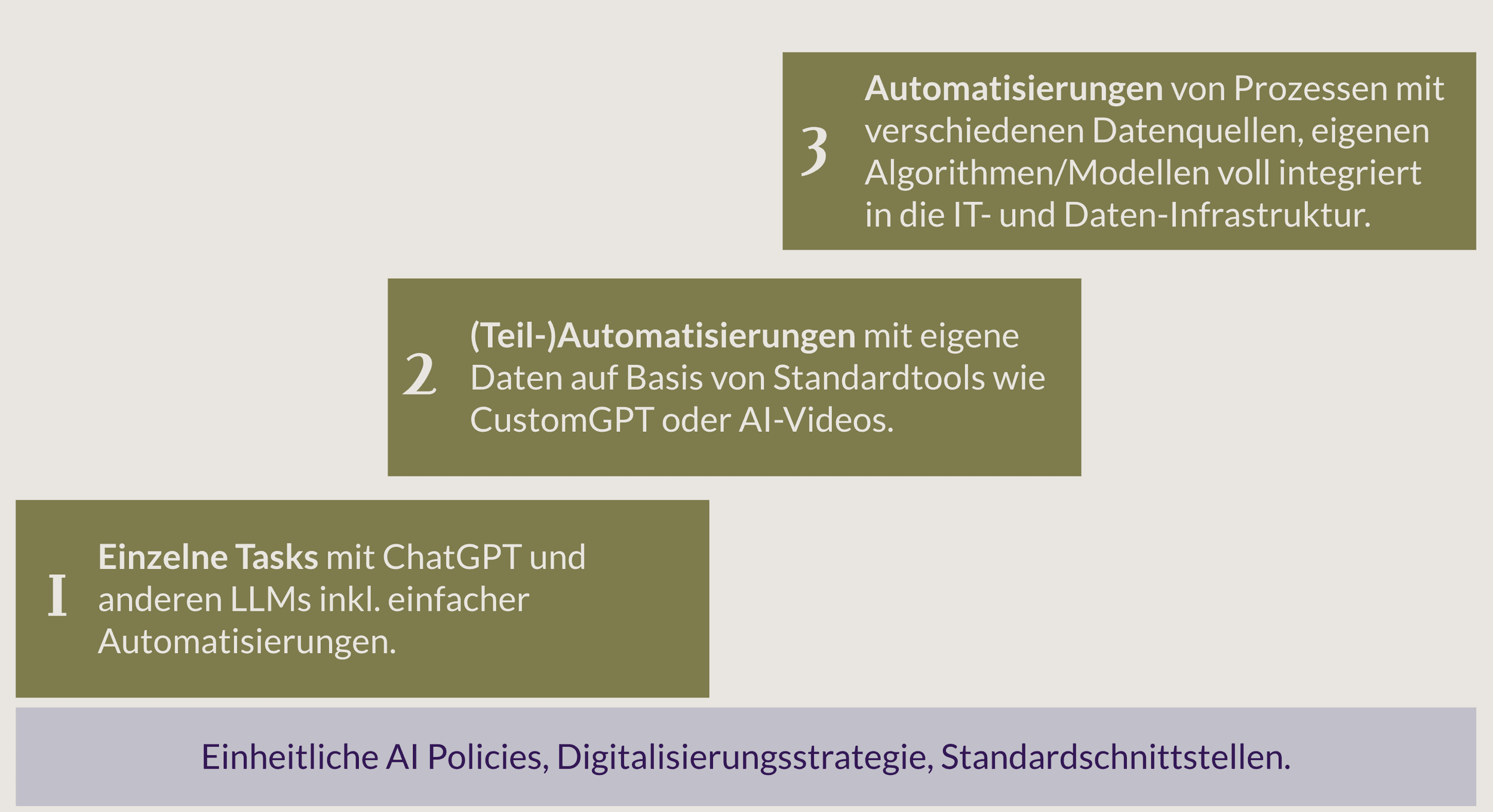
Stage 1: Automate individual tasks
Use of ChatGPT & LLMs for simple tasks
Test first prototypes, e.g. AI-generated content or analyses
Focus on quick wins
Stage 2: (Partial) automation with your own data
Use of standard tools (e.g. CustomGPT, AI video generators)
Initial data integration & workflow optimisation
Process analysis: Which steps should be fully automated?
Stage 3: Full automation
Integration of AI models into existing IT systems
Train your own AI models with internal data
Implement scaling & governance mechanisms
Next steps: the 3 most important initial measures
1️⃣ Develop AI principles & policies
📌 Define clear guidelines for the use of AI in the company
📌 Establish ethical guidelines and a data protection concept
2️⃣ Train employees & management
📌 Offer AI workshops & training for teams
📌 Prepare managers for strategic use of AI
3️⃣ Develop the AI Strategy Canvas
📌 Define a roadmap for the use of AI in interactive workshops
📌 Prioritise use cases and start initial tests